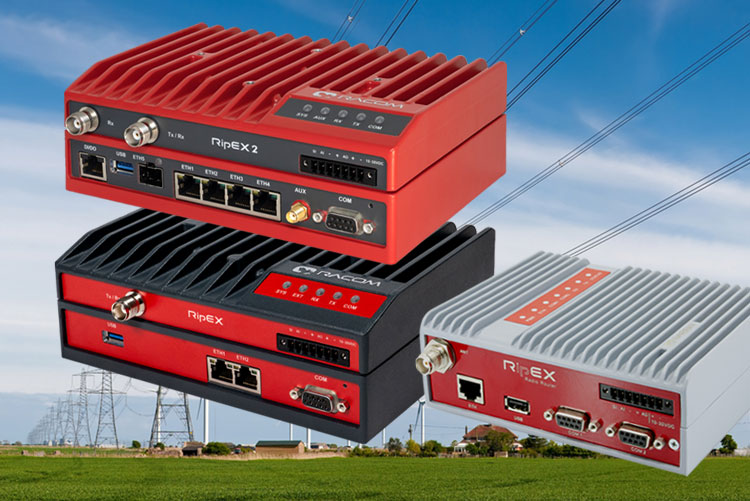
How do you modernise an energy distribution network stretched across rugged Caribbean terrain – replacing unstable links and costly field interventions with a fast, scalable backbone? For one of Central America’s largest utilities, the answer was RipEX2.
https//www.racom.eu/ru/case/energy-distribution
Challenge: Unstable Communication in Harsh and Diverse Environments
Operating along the Caribbean coastline, the utility relied on point-to-point radio links that struggled under demanding conditions:
- chronic latency and unstable connectivity
- multipath interference over long distances
- repeated service trips due to link failures
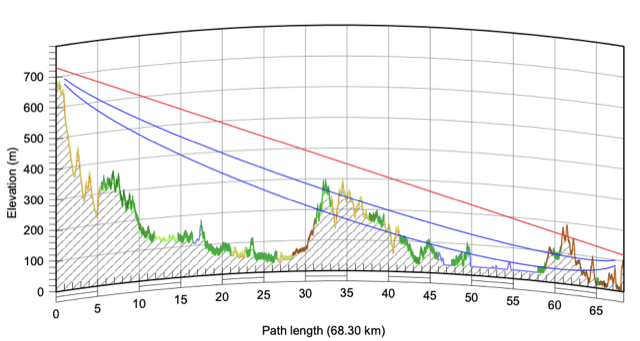
- several repeaters required just to bridge a 68 km connection
- lack of scalability needed for SCADA modernisation
The network was difficult to maintain and too fragile to support the utility’s long-term growth.
Solution: RipEX2 Redefines Network Architecture and Performance
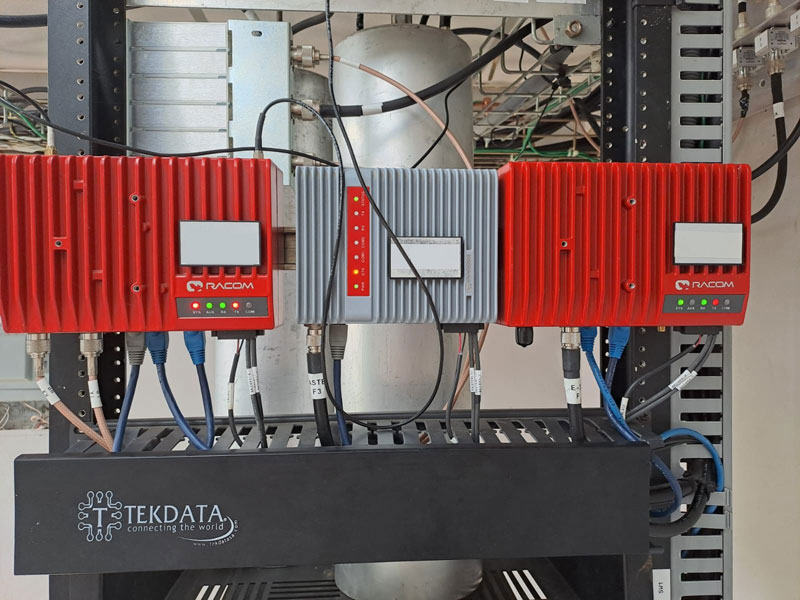
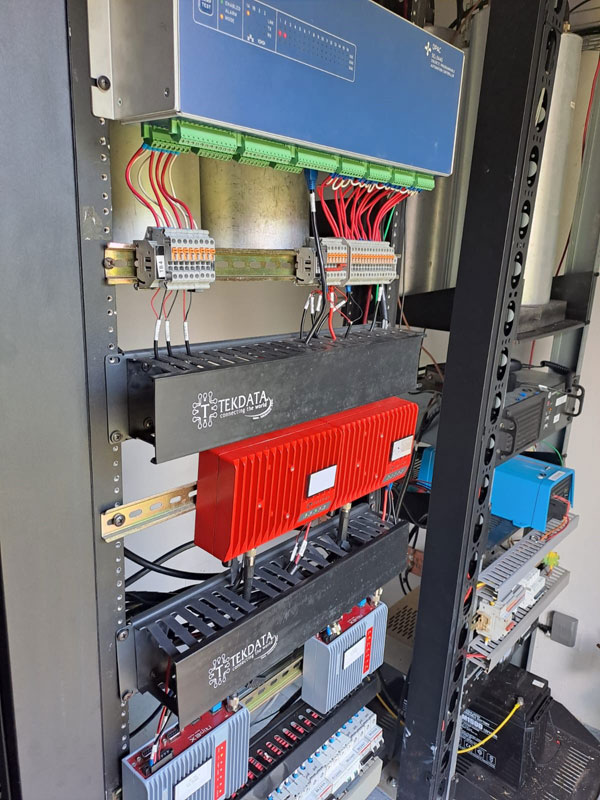
The utility deployed RACOM RipEX and RipEX2 radios, transitioning from point-to-point layouts to efficient point-to-multipoint topologies that remained stable even without line-of-sight.
Key advancements:
- 68 km backbone link without repeaters – enabled by RipEX2’s advanced QAM modulation and exceptional sensitivity
- LTE module for instant activation – allowing the network to go live immediately while the VHF/UHF backbone was still being built
- LTE as a backup and management channel – enabling centralised remote monitoring and configuration
- resilient star topologies – supported by BDP routing for deterministic, collision-free communication
This hybrid architecture drastically reduced both deployment time and operational effort.
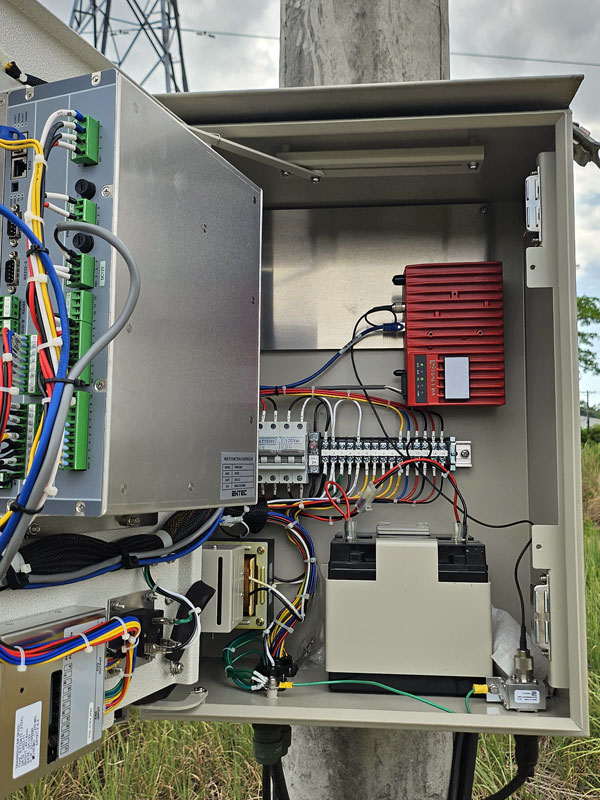
Results: Reliable, Scalable and Ready for Future Expansion
By 2024, nearly 600 RipEX and RipEX2 units were deployed across the network. Benefits included:
- reliable long-distance communication without repeaters
- dramatically improved stability and lower latency
- elimination of costly field service trips
- centralised LTE-based remote management for radios and connected devices
- rapid expansion to reclosers and additional endpoints
Encouraged by these results, the utility is evaluating full-duplex RipEX2 links for higher throughput, RipEX2-HS for high availability and RAy microwave links for future backbone upgrades.
With RipEX2, the company has built a communication platform that is not only resilient today, but designed to scale with the energy network of tomorrow.