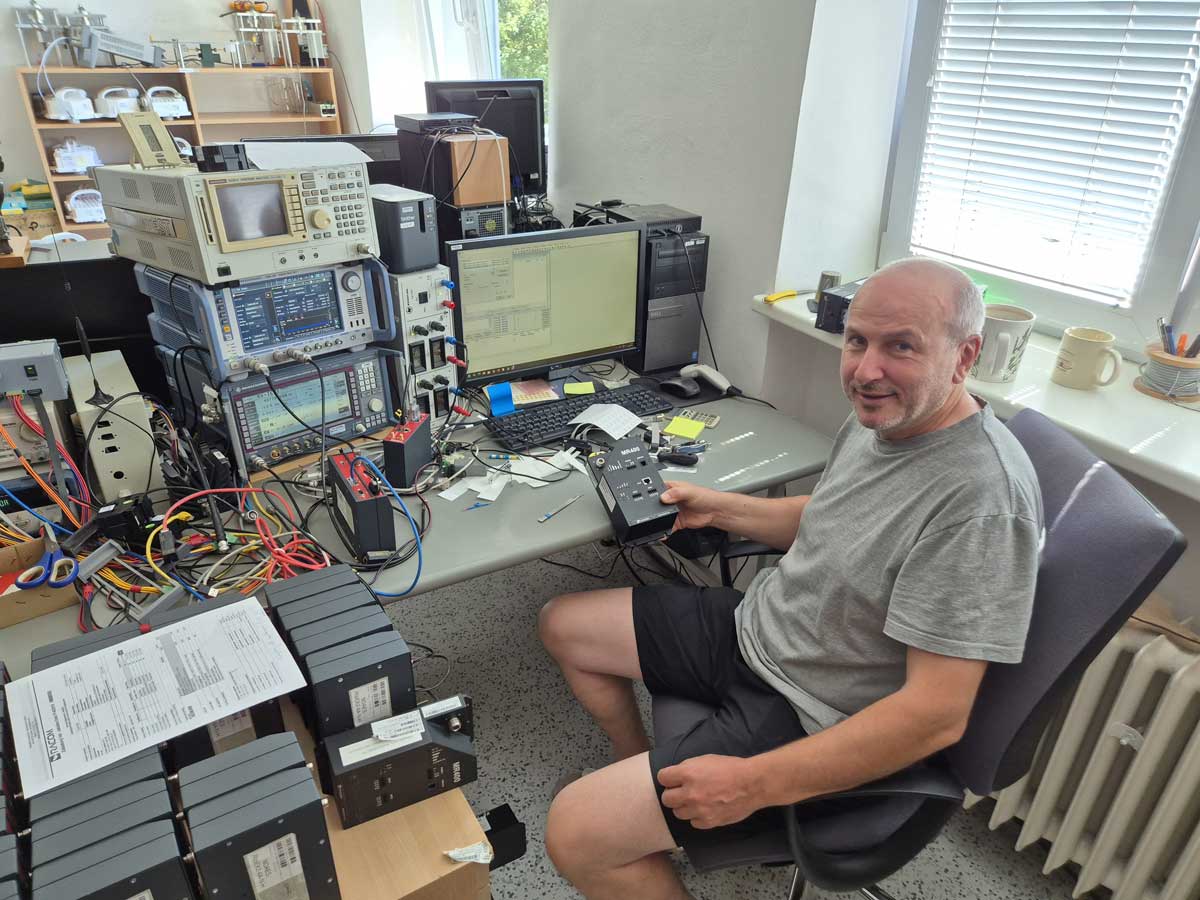
In July, we manufactured the very last MR400 radio modem. It is heading to Finland, where it will be used to expand an existing network. It is remarkable to think that this product remained in production for more than 20 years.
During that time, thousands of MR400 modems were deployed around the world. Many of them are still operating continuously today, proving that quality engineering and robust design truly stand the test of time.
Ending production is a natural step. Key electronic components used in the modem are no longer available, and the product no longer meets today’s cybersecurity requirements. However, we are not leaving our customers without support. We continue to service the MR400 and, thanks to our stock of spare parts, we believe we will be able to support installed units for many years to come.
Long-term service and product support are among the values RACOM has always been committed to. We still service our very first product, the R2CW amateur radio transceiver, introduced back in 1989.
The accompanying photos also remind us that behind every long-lasting product are the people who created it. Some of the colleagues who helped bring the MR400 to life more than twenty years ago are still part of RACOM today. While they have changed a little over the years, the modem itself has remained virtually unchanged. In the meantime, they have passed on their knowledge and expertise to a new generation of colleagues, many of whom were only just starting school when the MR400 was introduced.
The MR400 is not the only example of exceptional product longevity. We are still able to supply the first generation of the RipEX radio modem, introduced in 2011, in limited quantities to expand existing networks. However, after fifteen years, this product is also gradually approaching the end of its lifecycle, while service and support remain available.
We would like to thank all our customers who have trusted the MR400 for more than two decades. Its exceptional longevity confirms our belief that reliability, long-term support, and continuity remain essential for critical infrastructure communications.