Breaking Through the Digital Desert in NYC

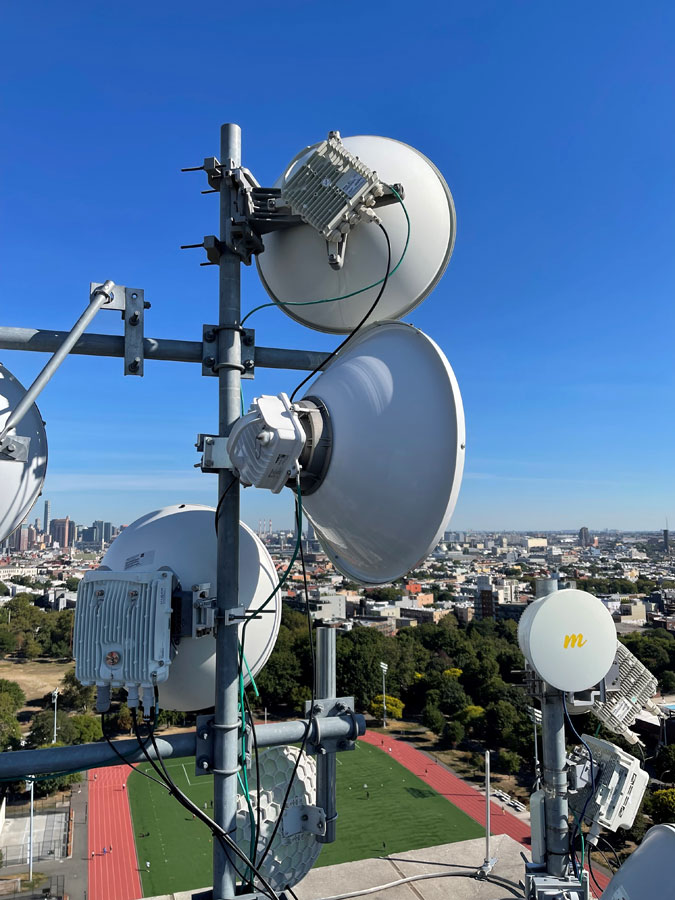
RACOM RAy in New York City

https//www.racom.eu/ru/case/digital-desert

How do you deliver high-speed internet in a city where rooftop spectrum is more crowded than the streets below?

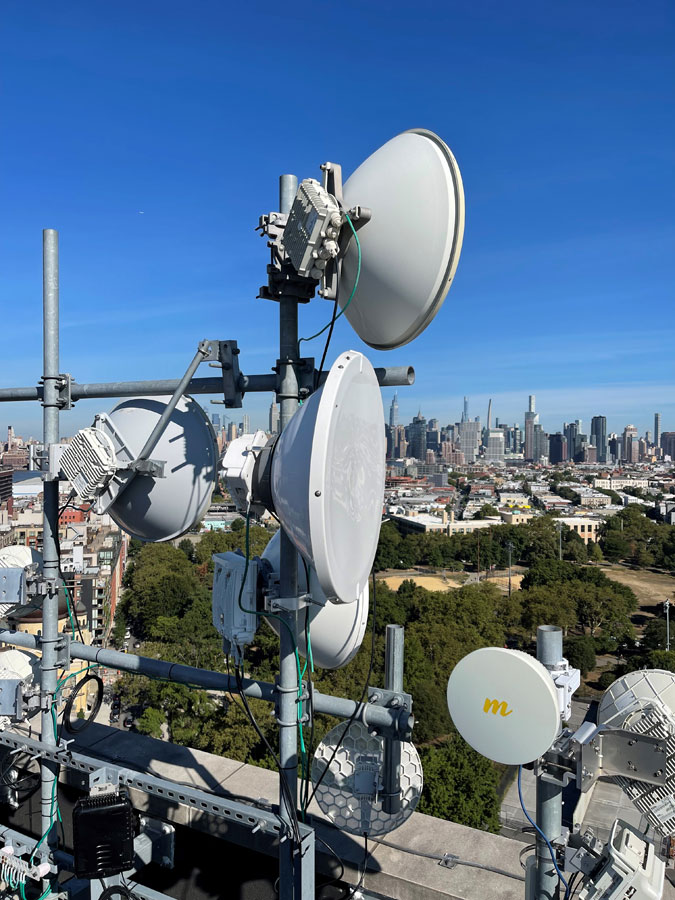
In New York City – where fiber is often impossible or prohibitively expensive to install – large parts of Manhattan, Brooklyn and Queens have become “digital deserts”. Skywire Networks, one of the largest business internet providers in NYC, set out to change that using RACOM’s RAy microwave links.
Challenge: Conquering New York’s Crowded Skies

New York’s 24 GHz band is one of the most congested radio environments on the planet. Skywire needed to build and expand its wireless backbone in conditions that included:

  • Extremely high interference from other 24 GHz links
  • Limited or no access to fiber in many commercial buildings
  • Strict demands on uptime and throughput from business customers
  • Complex rooftop environments and variable link conditions
  • A need to reuse spectrum efficiently while avoiding noisy channels

Skywire had tested multiple microwave vendors over the years. Many links struggled to maintain stable capacity under real-world interference. The company needed a solution that would not just cope with congestion, but perform reliably in spite of it.

Solution: RAy Microwave Links Deliver Where Others Fail

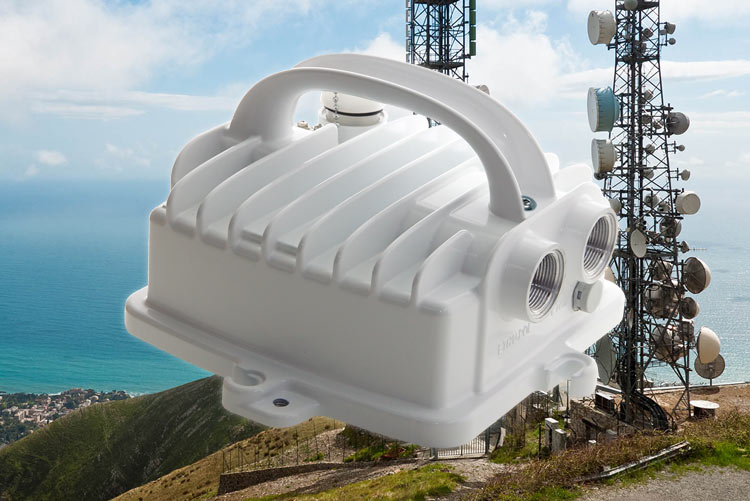
On the recommendation of Alliance Corporation – one of the largest WISP suppliers in the U. S. and Canada – Skywire tested RACOM’s 24 GHz RAy links. The difference was clear.

RAy delivered:

  • Up to 1 Gbps of reliable throughput even in heavily congested parts of NYC
  • Advanced filtering and adaptive modulation, keeping links up where others dropped
  • Asymmetric channel capability, allowing Skywire to “shape” channels around partial interference
  • High spectral efficiency, squeezing maximum capacity from limited 24 GHz spectrum

One of the first major deployments connected Central Park to the Bronx – a demanding urban path with high interference. RAy links quickly proved more robust than alternative solutions, earning their place as a core part of Skywire’s growing network.

System Architecture Highlights

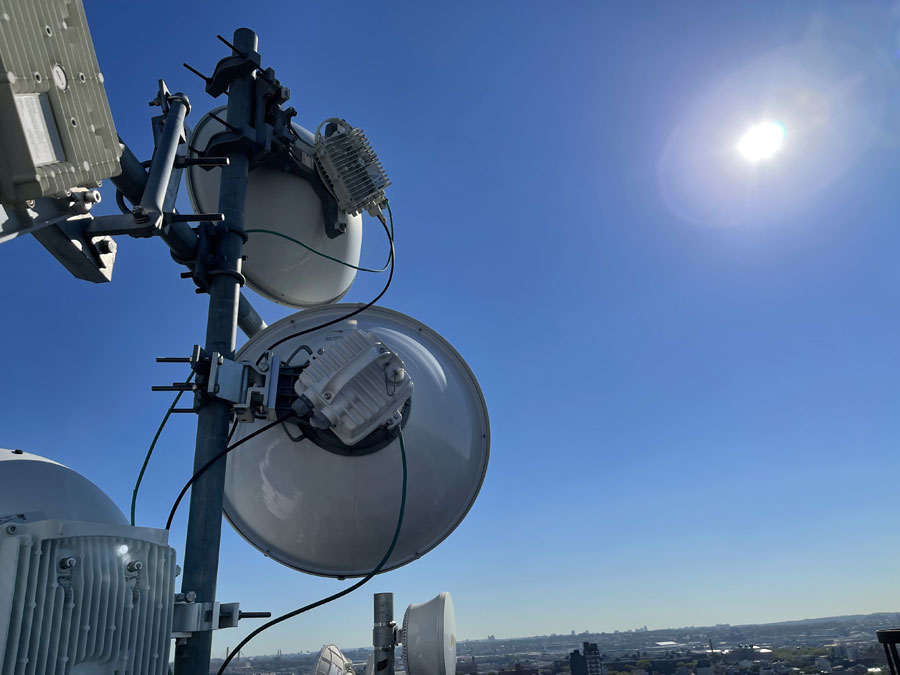
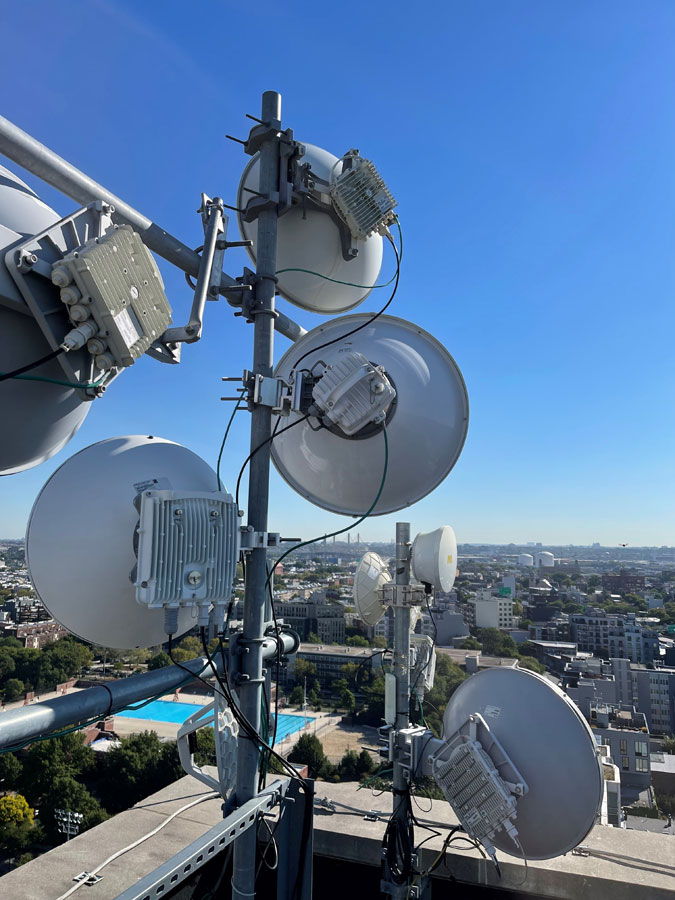
  • RAy microwave links deployed across rooftop-to-rooftop paths in Manhattan, Brooklyn and Queens
  • Use of 24 GHz links as primary backhaul where fiber is not available or economical
  • Asymmetric channel configuration to avoid localised interference and optimize throughput
  • Seamless integration into Skywire’s existing IP network and routing architecture
  • Remote diagnostics and monitoring for proactive maintenance and performance tuning

As Skywire’s footprint expanded, RAy links in additional bands – 18 GHz and 11 GHz – were introduced to match link distances, regulations and capacity needs.

Results: Turning Digital Deserts into Connected Districts

With RAy, Skywire has been able to:

  • Provide stable, high-speed connectivity in some of NYC’s most RF-challenging locations
  • Improve service availability in underserved “digital desert” areas without laying fiber
  • Reduce operational risk by using links that tolerate heavy interference
  • Scale its network using a consistent, high-performance microwave platform

The Bigger Picture: RAy in North America

RACOM has been building its presence in the U. S. market since 2016. The success of RAy in New York City – one of the toughest RF environments in the world – became a major reference. Through partners such as Alliance Corporation and ISP Supplies, RAy links are now being deployed by WISPs and network operators across North America, in:

  • Dense urban rooftop networks
  • Suburban fixed wireless access
  • Backhaul and backbone applications

With the launch of RAy3-80 GHz, RACOM’s portfolio now covers 11, 18, 24 and 80 GHz, giving operators even more options for high-capacity links in constrained spectrum.

One city, one rooftop at a time – RAy is redefining what is possible for urban wireless broadband.

©  2026 RACOM s.r.o. All Rights Reserved.