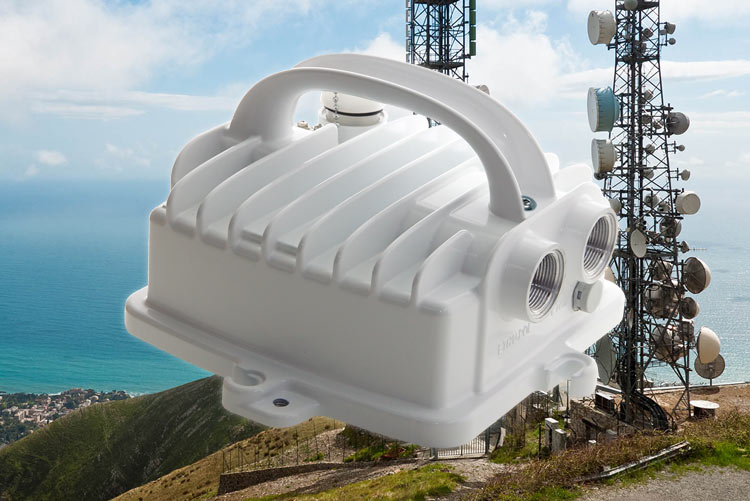
How do you deliver real-time video and telemetry from seven major traffic arteries – through a dense urban environment full of RF noise, reflections and limited installation options? Prague found the answer in RAy.
https//www.racom.eu/ru/case/ray-ensures-reliable-traffic-monitoring-across-prague
Challenge: High-Capacity, Interference-Resistant Backhaul for Citywide Traffic Control
Prague’s road traffic has grown dramatically in recent years. To keep the city moving, the Prague Technical Maintenance Communication Centre launched a project to monitor traffic flow across key routes. The solution was designed and delivered by Kapsch TrafficCom Construction & Realization together with CAMEA and was deployed in 2015, with partial EU funding.
The system needed to transport:
- High-volume video streams from roadside cameras
- Telemetry and traffic-flow data
- Signals from visual-detection sensors
- All of it aggregated over repeaters placed along road corridors
Given the amount of data and Prague’s challenging RF environment, microwave links were the only viable choice.
Solution: RAy 10 & 24 GHz Microwave Links – Compact, Low-Power and Highly Resilient
After extensive comparison of technologies, CAMEA selected RAy as the backbone for all traffic-monitoring links.
Why RAy proved the optimal solution:
- High resistance to interference in dense urban environments
- Very low power consumption
- Full outdoor design and compact dimensions
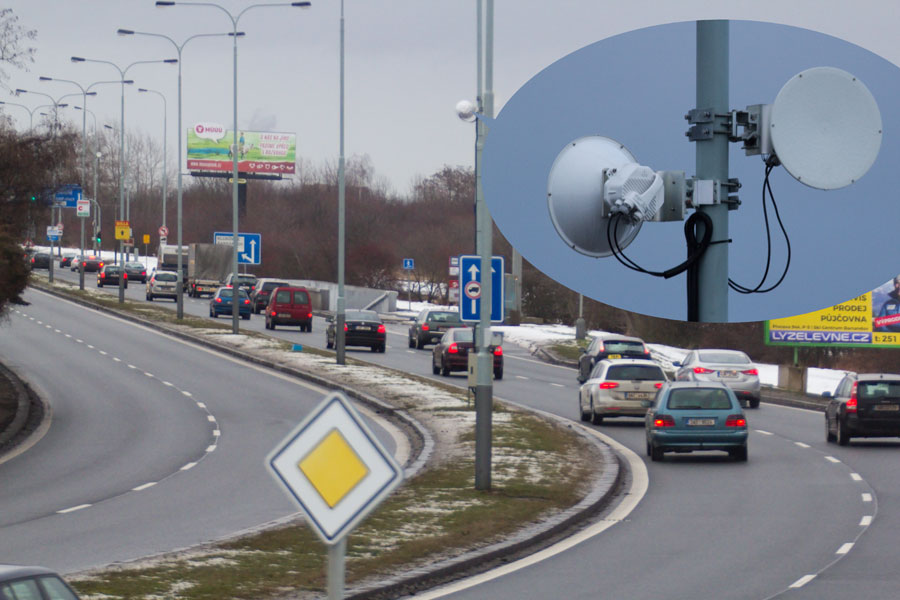
- Ability to mount directly on existing street-light infrastructure
- Smaller antennas thanks to excellent sensitivity and system gain
- Simplified installation with no need for new power circuits or construction work
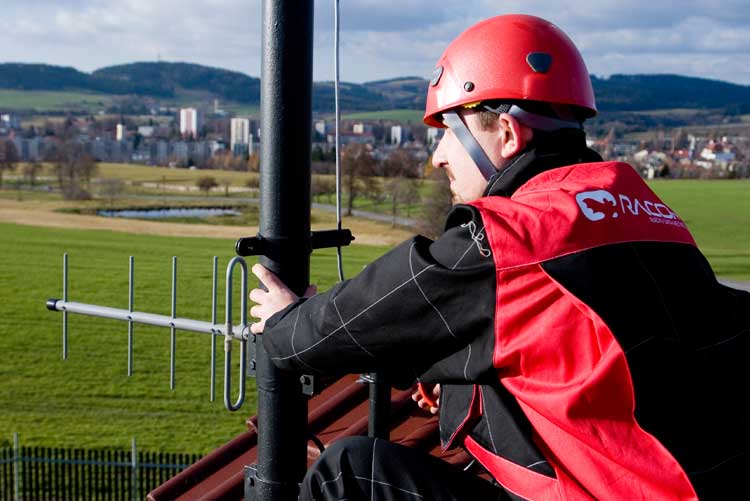
RACOM provided full path-analysis consulting during the design phase – recommending the ideal frequency (10 or 24 GHz) for each route based on potential interference and topology.

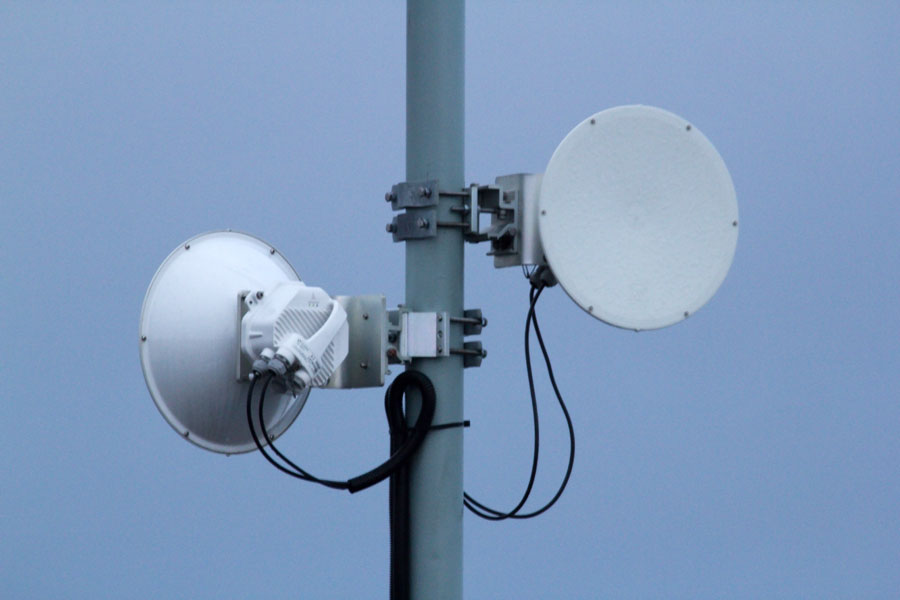
Results: 60 Stable, High-Capacity Links Across Prague
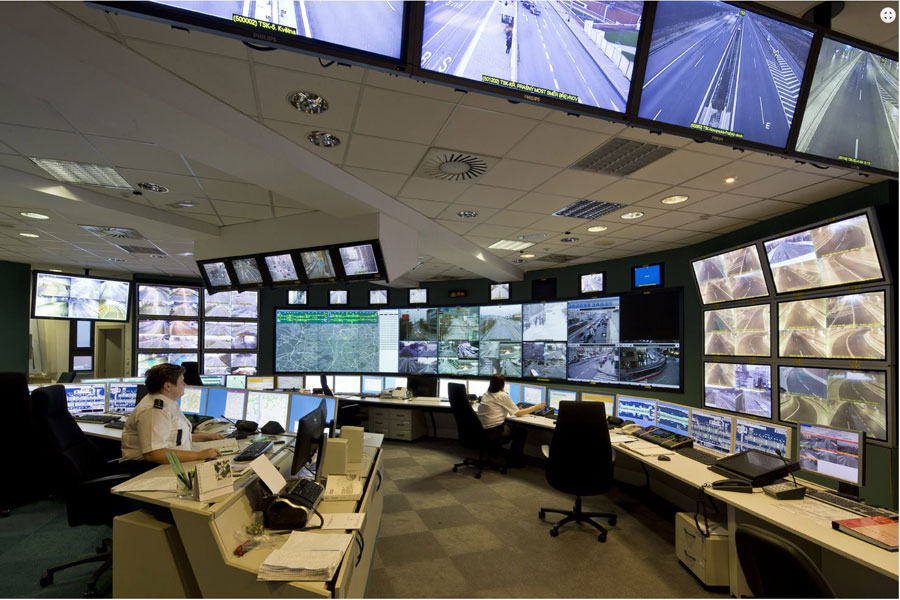
More than 60 RAy links are now in operation across the city, reliably carrying video and telemetry from seven arterial routes into the central control room.
Jan Sedláček, Head of the CAMEA IT Department, explains:
“The reliability of the RAy units was a key factor for us. Any microwave outage would interrupt the entire chain of data further along the route, and physical access for repairs would be costly and disruptive. After a year and a half of operation, our decision has been fully validated – there have been zero stability issues since day one.”
RAy has become the backbone of Prague’s traffic-flow monitoring system – delivering stable, interference-resistant connectivity in one of Europe’s busiest capitals.